
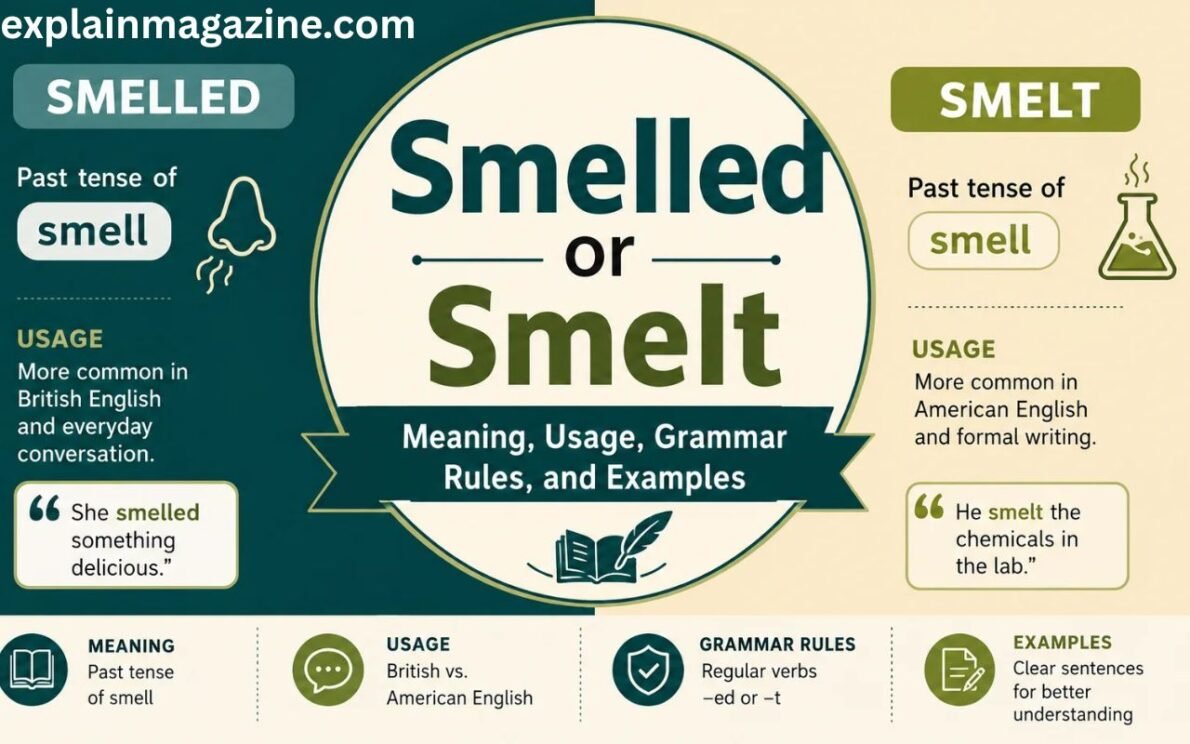

Many English learners and even native speakers often wonder: Is it smelled or smelt? Both words appear in books, articles, dictionaries, and everyday conversations, which can make choosing the correct form confusing.
The good news is that both “smelled” and “smelt” are grammatically correct. They are accepted past tense and past participle forms of the verb smell. The difference mainly comes down to regional usage and writing style. American English strongly prefers smelled, while British English commonly accepts both smelled and smelt. Major dictionaries, including Cambridge and Oxford, recognize both forms.
Quick Bio Table
| Topic | Details |
|---|---|
| Word | Smell |
| Part of Speech | Verb |
| Present Tense | Smell |
| Past Tense | Smelled / Smelt |
| Past Participle | Smelled / Smelt |
| Present Participle | Smelling |
| American English Preference | Smelled |
| British English Preference | Smelled or Smelt |
| Australian English Usage | Smelled or Smelt |
| Dictionary Status | Both Accepted |
| Meaning Difference | None |
Is It Smelled or Smelt?
One of the most searched grammar questions is: “Is it smelled or smelt?”
The answer is simple: both forms are correct. The verb smell has two accepted past forms:
- Smelled
- Smelt
For example:
- I smelled smoke coming from the kitchen.
- I smelt smoke coming from the kitchen.
Both sentences are grammatically correct and communicate the same meaning.
The choice depends largely on the type of English you are using. If you are writing for an American audience, smelled is generally preferred. If you are writing for a British audience, either smelled or smelt can be used.
Smelled or Smelt Grammar Explained
From a grammar perspective, the verb smell is unusual because it has both a regular and an irregular past form.
Regular Form
The regular form follows the standard pattern:
- Smell → Smelled
Examples:
- She smelled the flowers.
- We smelled fresh bread.
- The room smelled wonderful.
Irregular Form
The irregular alternative is:
- Smell → Smelt
Examples:
- She smelt the flowers.
- We smelt fresh bread.
- The room smelt wonderful.
Unlike some irregular verbs that change meaning or usage, smelled and smelt mean exactly the same thing when used as past forms of smell.
Past Tense of Smell: Smelled or Smelt?
The most common question is about the past tense of smell.
Both forms are accepted:
Using Smelled
- I smelled smoke yesterday.
- The soup smelled delicious.
- They smelled something unusual.
Using Smelt
- I smelt smoke yesterday.
- The soup smelt delicious.
- They smelt something unusual.
In formal American writing, smelled is usually the preferred choice. In British English, many writers naturally choose smelt.
I Smelled or Smelt: Which Should I Use?
If you are writing a sentence beginning with “I,” both options remain correct.
Examples:
- I smelled perfume in the hallway.
- I smelt perfume in the hallway.
If your audience is American, use I smelled.
If your audience is British, either I smelled or I smelt is acceptable.
For international audiences, I smelled is often considered the safest option because it is universally recognized.
Have You Smelled or Smelt?
The same rule applies when using the present perfect tense.
Examples:
- Have you smelled this perfume before?
- Have you smelt this perfume before?
Both are grammatically correct.
Other examples include:
- I have smelled that scent before.
- I have smelt that scent before.
- She has smelled smoke all day.
- She has smelt smoke all day.
Again, American English tends to favor smelled, while British English commonly uses both forms.
Smelled or Smelt Meaning
Many people assume there must be a difference in meaning between the two words.
There is not.
When used as the past tense or past participle of smell, both words have identical meanings.
They can refer to:
1. Detecting an Odor
Examples:
- I smelled gas in the kitchen.
- I smelt gas in the kitchen.
2. Having a Particular Odor
Examples:
- The flowers smelled lovely.
- The flowers smelt lovely.
3. Sensing Something Figuratively
Examples:
- She smelled trouble immediately.
- She smelt trouble immediately.
In all these examples, the meaning remains unchanged.
It Smelled or Smelt?
Another frequently searched phrase is “it smelled or smelt.”
Both constructions are correct.
Examples:
- It smelled like fresh coffee.
- It smelt like fresh coffee.
- It smelled strange.
- It smelt strange.
The sentence remains grammatically correct regardless of which form you choose.
Smelled or Smelt in a Sentence
Here are several example sentences showing both forms in context.
Sentences with Smelled
- The cake smelled amazing.
- I smelled smoke outside.
- The room smelled of fresh paint.
- She smelled the roses carefully.
- They smelled something burning.
Sentences with Smelt
- The cake smelt amazing.
- I smelt smoke outside.
- The room smelt of fresh paint.
- She smelt the roses carefully.
- They smelt something burning.
These examples demonstrate that both forms function identically in sentences.
Smelled or Smelt UK Usage
In the United Kingdom, both forms are accepted.
British speakers frequently use smelt, especially in conversation and traditional writing.
Common British examples include:
- The room smelt of coffee.
- The garden smelt wonderful.
- I smelt smoke from upstairs.
However, British writers also use smelled regularly.
Examples:
- The room smelled of coffee.
- The garden smelled wonderful.
Neither choice would be considered incorrect in the UK.
Smelled or Smelt British English
British English is more flexible than American English regarding this verb.
You may see:
- smelled
- smelt
in newspapers, books, magazines, and online content.
Many British speakers naturally prefer smelt because it sounds more traditional, but smelled is equally accepted by modern grammar authorities.
Consistency is usually more important than the specific choice.
Smelled or Smelt Australia
Australian English generally follows many British English conventions.
As a result, both smelled and smelt are widely accepted.
Examples:
- The barbecue smelled great.
- The barbecue smelt great.
Australian writers may use either form depending on personal preference, publication style, or audience expectations.
Smelled or Smelt Dictionary Usage
Leading dictionaries recognize both forms.
Dictionary entries typically list:
- smelled
- smelt
as valid past tense and past participle forms of smell.
This confirms that neither version is incorrect.
When checking a dictionary, you will often find notes indicating that smelt is particularly associated with British English, while smelled is common in both American and international English.
Smelled or Smelt Oxford Dictionary Guidance
Oxford dictionaries recognize both forms.
Oxford generally identifies smelt as a British English alternative to smelled.
This means:
- Smelled = accepted everywhere
- Smelt = accepted, especially in British English
Writers following Oxford style guidelines can confidently use either form when writing for British audiences.
Is Smelled or Smelt Correct?
Yes, both are correct.
To summarize:
- Smelled is correct.
- Smelt is correct.
- Smelled is preferred in American English.
- Smelt is especially common in British English.
- Australian English accepts both.
- Oxford and Cambridge recognize both forms.
- There is no difference in meaning.
Therefore, if someone asks, “Is smelled or smelt correct?”, the answer is that both are grammatically correct and dictionary-approved.
Final Thoughts
Read More: Reoccurring or Recurring: Which Is Correct and When Should You Use Each Word?
The debate over smelled or smelt is not really about correctness but about regional preference. Both words serve as the past tense and past participle of smell, and both are recognized by respected dictionaries and grammar authorities. American English generally favors smelled, while British English commonly accepts both smelled and smelt. Understanding your audience will help you choose the most natural option.
At worldknowledge, we believe that mastering small grammar differences like smelled or smelt can make your writing more confident, accurate, and professional. Whether you choose smelled or smelt, the key is consistency and awareness of the variety of English you are using.