

Introduction
Some crime figures become famous because they seek attention. Others become legendary because they avoid it. That contrast helps explain why interest in Russell Bufalino remains strong decades after his death. People search for terms like Russell Bufalino mansion, Russell Bufalino wife, Russell Bufalino children, Russell Bufalino Jimmy Hoffa, and how did Russell Bufalino die because his story differs from that of more public Mafia bosses.
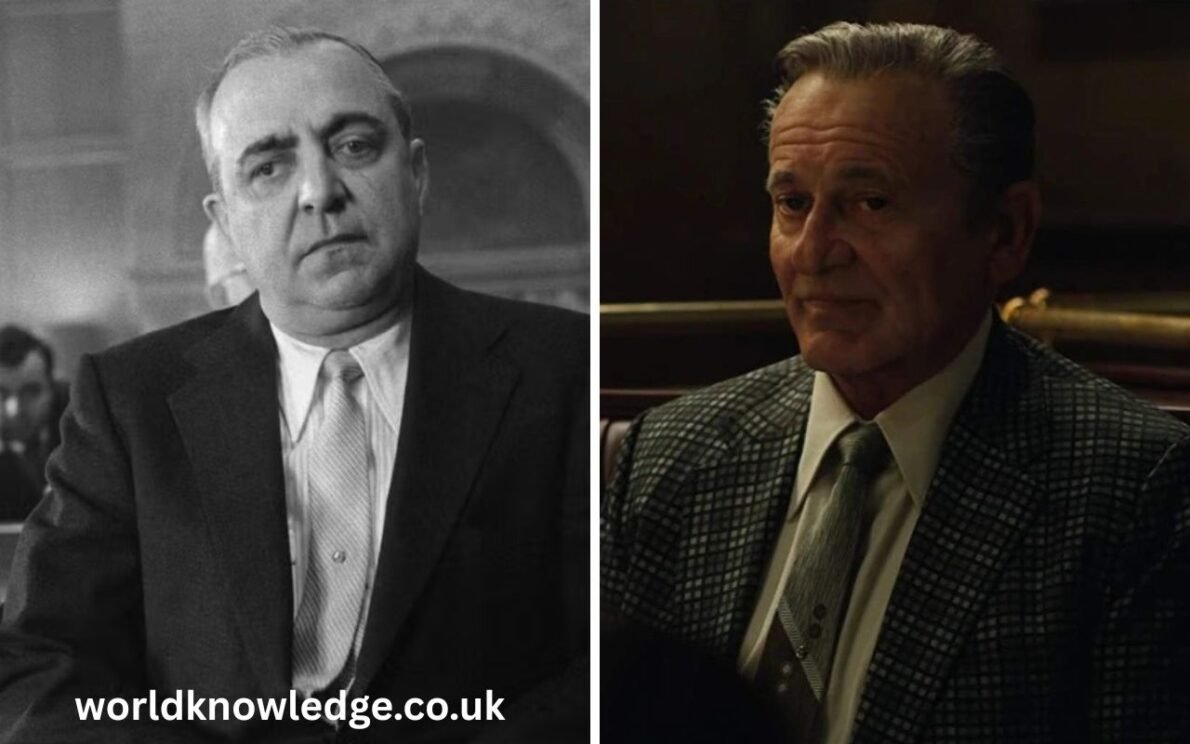
Unlike flashy underworld figures who cultivated celebrity status, Bufalino built influence through secrecy, relationships, and strategic alliances. Law enforcement agencies, journalists, and organized crime researchers have long described him as one of the most respected and well-connected Mafia leaders in America. He gained renewed public attention through The Irishman, where Joe Pesci portrayed him as a quiet but enormously influential power broker.
This article explores who Russell Bufalino was, his family life, his role in organized crime history, his connection to Jimmy Hoffa, his home and lifestyle, the circumstances of his death, and why many historians continue to debate just how powerful he really was.
Who Was Russell Bufalino?
Russell Bufalino was an Italian-American organized crime boss who led the Northeastern Pennsylvania Mafia organization commonly known as the Bufalino crime family. Born Rosario Alfredo Bufalino in Sicily in 1903, he immigrated to the United States and eventually became one of the most influential underworld figures in the country.
Unlike many famous mob bosses, Bufalino rarely appeared in headlines.
His reputation was built on:
- Strategic alliances
- Political connections
- Labor union influence
- Long-term relationships with other Mafia leaders
- Maintaining a low public profile
This approach earned him the nickname “The Quiet Don.”
Why Historians Find Him Fascinating
Many crime bosses relied on intimidation and publicity.
Bufalino’s influence came from something less visible: trust among other powerful figures. This allowed him to maintain authority for decades while attracting comparatively less public attention than contemporaries such as John Gotti.
Was Russell Bufalino Powerful?
One of the most common search questions is:
Was Russell Bufalino powerful?
The short answer is yes.
Many organized crime historians consider him one of the most influential Mafia leaders of the twentieth century. His family was relatively small compared to New York’s major crime families, but his network extended far beyond Pennsylvania.
Sources of His Influence
Bufalino’s power came from several areas:
- Labor union connections
- Relationships with national Mafia leaders
- Influence in Pennsylvania and New York
- Access to Teamsters leadership
- Ability to mediate disputes among criminal organizations
A U.S. Senate subcommittee once described him as one of the most powerful Mafia leaders in America, a reputation that continues to influence discussions of organized crime history.
Unique Insight #1
Modern audiences often measure criminal power by media visibility. Bufalino demonstrates the opposite principle. His influence grew precisely because he avoided attention while maintaining relationships with people who controlled money, labor unions, and criminal enterprises.
Russell Bufalino’s Family and Early Life
Russell Bufalino was born in Montedoro, Sicily, before immigrating to the United States as a child. He eventually settled in northeastern Pennsylvania, an area that became the center of his criminal organization.
Russell Bufalino’s Wife
Bufalino was married to Carolyn Bufalino for many decades. Those who studied his life often describe their marriage as stable and private compared with the turbulent personal lives associated with many organized crime figures.
Russell Bufalino Children
A common search topic is Russell Bufalino children.
Historical accounts generally indicate that Russell and Carolyn Bufalino did not have children. This fact has contributed to confusion when people attempt to build a Russell Bufalino family tree because many relatives with the Bufalino surname were cousins, nephews, or extended family members rather than direct descendants.
Russell Bufalino Family Tree
The Bufalino family network extended throughout Pennsylvania and beyond. Family relationships played an important role in organized crime operations because trust was often based on kinship and shared Sicilian origins.
Russell Bufalino House and Mansion
Searches for Russell Bufalino mansion and Russell Bufalino house are surprisingly common.
Did He Live in a Mansion?
Contrary to popular expectations, Bufalino was not known for living in an extravagant mansion.
This is one of the most misunderstood aspects of his life.
Unlike many Hollywood depictions of crime bosses, Bufalino preferred modest appearances. His residences reflected practicality rather than conspicuous wealth.
Why His Lifestyle Matters
The modest nature of his home reveals an important aspect of his leadership philosophy:
- Avoid unnecessary attention
- Blend into the community
- Minimize law enforcement scrutiny
- Preserve long-term influence
Unique Insight #2
Many powerful criminals eventually attracted investigations because their lifestyles became impossible to ignore. Bufalino’s restraint may have contributed significantly to his longevity as a crime boss.
Russell Bufalino and Jimmy Hoffa
Perhaps no topic is more closely associated with Bufalino than Jimmy Hoffa.
The Hoffa Connection
Jimmy Hoffa, the powerful Teamsters leader, maintained relationships with several organized crime figures. Bufalino’s cousin, attorney Bill Bufalino, served as Hoffa’s longtime legal counsel and adviser.
This connection helped strengthen ties between organized crime and labor union leadership.
The Disappearance Mystery
Jimmy Hoffa disappeared on July 30, 1975, in one of the most famous unsolved cases in American history.
Numerous theories have linked Bufalino to the events surrounding Hoffa’s disappearance. Some accounts, including claims popularized through books and films, suggest that Bufalino may have played a role in decisions regarding Hoffa’s fate. However, many details remain disputed and unproven.
Separating Fact From Speculation
It is important to distinguish between:
- Verified historical evidence
- Law enforcement theories
- Witness testimony
- Popular culture portrayals
The Hoffa case remains officially unsolved.
Russell Bufalino and The Irishman
Public interest in Bufalino increased dramatically after Martin Scorsese’s The Irishman.
Joe Pesci portrayed him as a calm, calculating leader who preferred diplomacy over violence.
How Accurate Was the Film?
The movie captured several widely reported aspects of Bufalino’s reputation:
- Quiet leadership style
- Extensive connections
- Relationship with Hoffa
- Long-term influence within organized crime
However, as with many historical films, certain events remain debated among researchers and historians.
Unique Insight #3
One reason the film resonated with audiences is that Bufalino challenged traditional mob-movie stereotypes. He rarely raised his voice, displayed wealth, or sought public recognition. Yet many observers believed he wielded enormous influence behind the scenes.
Russell Bufalino Net Worth
Searches for Russell Bufalino net worth often produce dramatic estimates.
Why Exact Numbers Are Impossible
Determining the net worth of organized crime figures is extremely difficult because:
- Income was often concealed.
- Assets were rarely reported publicly.
- Businesses could be controlled indirectly.
- Financial records were incomplete.
A Better Question
Instead of asking how much money Bufalino possessed personally, it is more useful to ask:
How much influence did he control?
Many historians argue that his true power came from access, relationships, and authority rather than visible wealth.
Russell Bufalino Books Worth Reading
Searches for Russell Bufalino book often lead readers to several well-known works.
Among the most discussed are:
- The Quiet Don by Matt Birkbeck
- I Heard You Paint Houses by Charles Brandt
- Bufalino: Revelations of a Mafia Family, the Teamsters, and the Final Resting Place of Jimmy Hoffa by Charles Bufalino
Each offers a different perspective on Bufalino’s influence, relationships, and role in organized crime history.
How Did Russell Bufalino Die?
Another common question is:
How did Russell Bufalino die?
Russell Bufalino died on February 25, 1994, at age 90 in Kingston, Pennsylvania. Historical records indicate that he died of natural causes following declining health in his later years.
Russell Bufalino Cause of Death
The reported cause of death was natural causes. Unlike many notorious crime figures who died violently, Bufalino survived into old age and passed away in a hospital setting.
Why This Is Remarkable
Many Mafia leaders were:
- Murdered
- Imprisoned for life
- Forced into witness protection
Bufalino’s ability to reach age 90 stands out in organized crime history.
Where Is Russell Bufalino Buried?
People frequently search:
Where is Russell Bufalino buried?
Historical records identify his burial site as Denison Cemetery in Swoyersville, Pennsylvania.
The cemetery continues to attract occasional attention from organized crime researchers and history enthusiasts interested in his legacy.
Common Misconceptions About Russell Bufalino
Myth #1: He Was Only a Local Pennsylvania Boss
Although based in Pennsylvania, his influence extended into labor unions, New York organized crime circles, and national criminal networks.
Myth #2: He Lived Like a Hollywood Mobster
Evidence suggests he preferred modest living arrangements and avoided unnecessary displays of wealth.
Myth #3: All Hoffa Theories Are Proven Facts
Many claims regarding Hoffa remain theories rather than established historical facts.
Myth #4: Every Bufalino Relative Was His Child
Historical accounts generally indicate that Russell Bufalino had no children, despite frequent confusion involving extended family members.
Frequently Asked Questions
Who was Russell Bufalino?
Russell Bufalino was an Italian-American Mafia boss who led the Northeastern Pennsylvania crime family for decades. He became known for his quiet leadership style, extensive connections, and influence within organized crime.
Was Russell Bufalino more powerful than John Gotti?
The two figures operated in different eras and styles. While John Gotti was far more visible publicly, many historians believe Bufalino exercised significant behind-the-scenes influence through alliances and labor connections.
Did Russell Bufalino have children?
Historical sources generally indicate that Russell Bufalino and his wife Carolyn did not have children. Much confusion stems from the large extended Bufalino family network.
What was Russell Bufalino’s connection to Jimmy Hoffa?
Bufalino maintained connections to Hoffa through labor-union relationships and through his cousin Bill Bufalino, who served as Hoffa’s attorney. Bufalino is frequently mentioned in discussions about Hoffa’s disappearance.
How did Russell Bufalino die?
Russell Bufalino died of natural causes in Kingston, Pennsylvania, on February 25, 1994, at the age of 90.
Is Mark Bufalino related to Russell Bufalino?
Public searches frequently ask this question, but reliable genealogical documentation connecting specific modern individuals to Russell Bufalino should be verified through credible family records rather than assumptions based solely on surname similarity.
Conclusion
Read More: Frank Gotti Agnello: Life, Family, and Where He Is Now
Russell Bufalino remains one of the most intriguing figures in organized crime history. Unlike many Mafia leaders who sought recognition, he cultivated influence through discretion, relationships, and long-term strategy. His connections to labor unions, organized crime leadership, and the enduring mystery surrounding Jimmy Hoffa continue to fuel public interest decades after his death.
Perhaps the most important lesson from Bufalino’s story is that power is not always visible. His legacy demonstrates how influence can operate quietly, far from headlines, while still shaping events on a national scale. Whether viewed through historical records, books, or modern films, Russell Bufalino remains a central figure in understanding the hidden structure of American organized crime.