

English contains many words that sound similar but have different meanings and uses. One common source of confusion is the choice between “yea” and “yeah.” Many people wonder whether they should write “yea” or “yeah” when they want to say yes, express agreement, or show excitement. The confusion increases because another similar word, “yay,” is also frequently used in conversations and online communication.
Understanding the difference between these words can improve your writing and help you communicate more clearly. While all three words exist in English, they serve different purposes and are appropriate in different situations. This guide explains the meaning, pronunciation, grammar, and correct usage of “yea,” “yeah,” and “yay,” along with examples to help you avoid common mistakes.
Quick Bio Table
| Topic | Details |
|---|---|
| Main Keyword | Yea or Yeah |
| Word Type | Interjection / Adverb |
| Language | English |
| Common Confusion | Yea, Yeah, and Yay |
| Most Common Usage | Yeah |
| Formal Usage | Yea |
| Excitement Expression | Yay |
| Pronunciation of Yea | Yay |
| Pronunciation of Yeah | Yeh / Yah |
| Purpose | Agreement, Voting, or Celebration |
Is It Yea or Yeah?
The short answer is that both “yea” and “yeah” are correct words, but they are used differently.
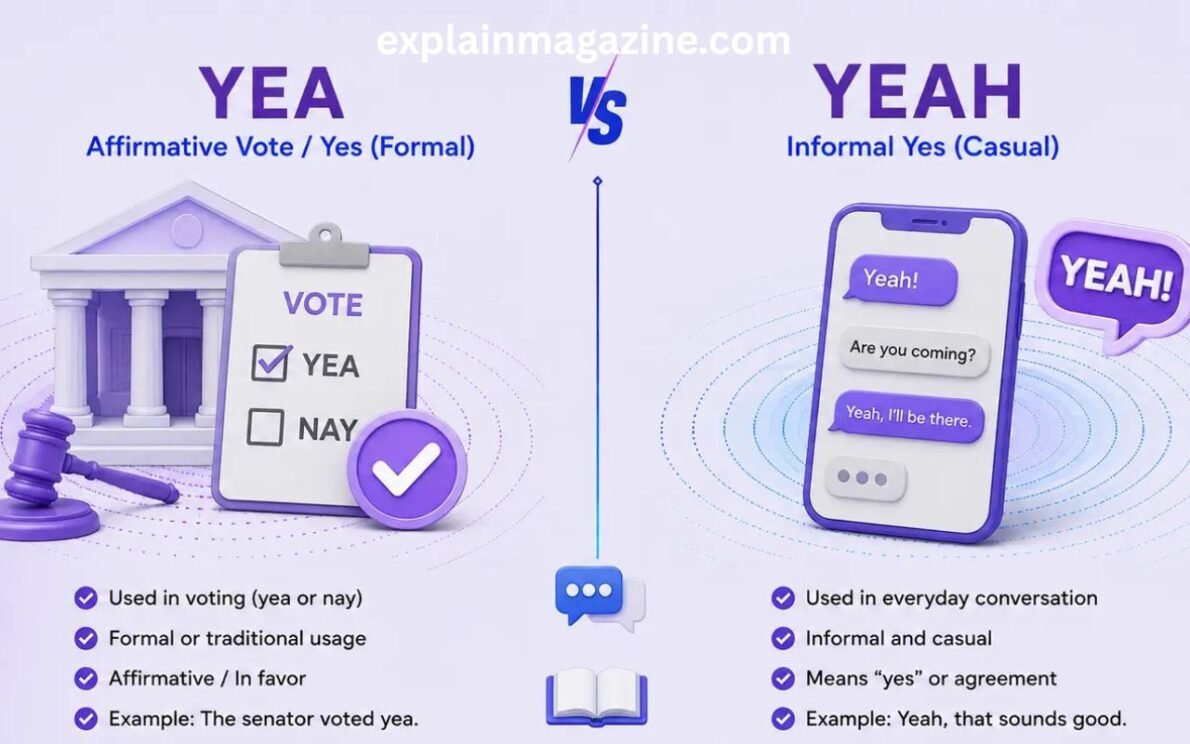
“Yeah” is an informal way of saying “yes.” It is commonly used in everyday conversations, text messages, social media posts, and casual writing.
Examples:
- Yeah, I understand what you mean.
- Yeah, that sounds like a great idea.
- Yeah, I’ll join you later.
On the other hand, “yea” is a more formal and traditional word meaning “yes.” It is rarely used in daily conversation and is most often found in voting situations, official proceedings, and historical texts.
Examples:
- The committee voted yea on the proposal.
- The bill passed with more yeas than nays.
Because “yeah” is much more common in modern English, it is usually the correct choice when responding to a question or showing agreement.
Yea or Yeah Meaning
Although both words can mean “yes,” their meanings differ slightly based on context.
Meaning of Yeah
“Yeah” is an informal substitute for “yes.” It expresses agreement, confirmation, or acknowledgment in a relaxed and conversational manner.
Examples:
- Yeah, I finished my homework.
- Yeah, that’s exactly what happened.
- Yeah, I agree with your opinion.
Because it is casual, “yeah” is often used when speaking with friends, family members, or colleagues in informal settings.
Meaning of Yea
“Yea” is a formal term meaning “yes,” especially in votes or official decisions. It has historical roots and is still used in certain parliamentary procedures.
Examples:
- Members voted yea to approve the measure.
- The chairman recorded twenty yeas and five nays.
You may also encounter “yea” in older literature, religious texts, or formal records.
Yea or Yeah: Which Is Correct?
Many people search for the answer to “yea or yeah which is correct.”
The truth is that both are correct words. The correct choice depends entirely on the context.
Use “yeah” when:
- Talking casually
- Texting friends
- Responding informally
- Writing conversational content
Use “yea” when:
- Referring to a vote
- Discussing legislative decisions
- Writing historical content
- Using the phrase “yea or nay”
For everyday communication, “yeah” is the correct and natural choice.
Yea or Yeah Pronunciation
One reason people confuse these words is because they are pronounced differently than they are spelled.
How to Pronounce Yeah
“Yeah” is pronounced like:
- Yeh
- Yah
Examples:
- Yeah, that’s true.
- Yeah, let’s go.
How to Pronounce Yea
“Yea” is pronounced exactly like:
- Yay
Examples:
- The senators voted yea.
- The proposal received a majority of yeas.
Knowing the pronunciation can help you remember which word belongs in a particular situation.
Yea, Yeah, or Yay?
This is one of the most common spelling questions in English.
These three words have completely different meanings.
Yeah
Means an informal “yes.”
Example:
- Yeah, I can help.
Yea
Means a formal or official “yes.”
Example:
- The council voted yea.
Yay
Expresses excitement, happiness, or celebration.
Example:
- Yay! We won the championship.
Many writers accidentally use “yea” when they really mean “yay.” This is one of the most common spelling mistakes involving these words.
Is Yea or Yeah Correct for Yes?
If you are simply saying “yes” in normal conversation, “yeah” is generally the correct choice.
Examples:
- Yeah, I would like some coffee.
- Yeah, I watched that movie.
- Yeah, I’ll attend the meeting.
Although “yea” technically means yes, it sounds outdated or overly formal in everyday speech.
In professional writing, the best option is often “yes” rather than either “yeah” or “yea.”
Is It Spelled Yea or Yeah?
The answer depends on what you are trying to express.
If you mean casual agreement:
- Correct: Yeah
- Incorrect: Yea
Example:
- Yeah, that’s correct.
If you mean an official vote:
- Correct: Yea
- Incorrect: Yeah
Example:
- The board voted yea.
Understanding the purpose of your sentence makes the correct spelling easy to choose.
Which Is Used for a Happy Response: Yea or Yeah?
Neither word is ideal for expressing excitement.
The correct word for excitement is “yay.”
Examples:
- Yay! We got tickets.
- Yay! School is over.
- Yay! The project was approved.
Many people mistakenly write “yea” when they mean “yay.” Remember that “yay” is the word associated with celebration and happiness.
How to Spell Yea or Yeah Correctly
A simple memory trick can help.
Remember This:
Yeah = Everyday agreement
Yea = Election or voting agreement
Yay = Happiness and celebration
Examples:
- Yeah, I’ll be there.
- The members voted yea.
- Yay! We won.
This quick rule helps eliminate confusion in most situations.
Common Examples in Sentences
Here are several examples showing the correct usage.
Using Yeah
- Yeah, I think that’s a good plan.
- Yeah, I completed the assignment.
- Yeah, that movie was excellent.
Using Yea
- The proposal passed with ten yeas and two nays.
- Every member voted yea.
- The motion received a unanimous yea vote.
Using Yay
- Yay! It’s finally Friday.
- Yay! We reached our goal.
- Yay! The package arrived.
These examples demonstrate how each word serves a unique purpose.
Common Mistakes People Make
Many English learners and native speakers make these mistakes:
Mistake 1
Incorrect:
- Yea, I agree with you.
Correct:
- Yeah, I agree with you.
Mistake 2
Incorrect:
- Yeah! We won the competition!
Better:
- Yay! We won the competition!
Mistake 3
Incorrect:
- The committee voted yeah.
Correct:
- The committee voted yea.
Avoiding these mistakes can make your writing appear more polished and professional.
Why This Confusion Exists
The confusion exists because the words are visually similar and sometimes sound alike.
Historically, “yea” was much more common in English than it is today. Over time, modern speakers adopted “yeah” as a casual alternative to “yes.” Meanwhile, “yay” emerged as the preferred expression for joy and celebration.
Today, “yeah” dominates everyday speech, while “yea” survives mainly in formal and historical contexts.
Final Thoughts
Read More: Chris Pratt Height: How Tall Is Chris Pratt? Height, Weight, Career, and Fitness Transformation
The debate over “yea or yeah” becomes simple once you understand the purpose of each word. Use “yeah” when you want to say yes in everyday conversation. Use “yea” when discussing formal votes, legislative decisions, or the phrase “yea or nay.” If you’re expressing excitement or celebration, choose “yay” instead.
Knowing these distinctions will improve your grammar, strengthen your writing, and help you avoid common spelling mistakes. Whether you’re texting a friend, writing an article, or participating in a formal discussion, choosing the right word ensures your message is clear and accurate.
At worldknowledge, we believe that understanding small language differences like “yea,” “yeah,” and “yay” can make a big impact on communication. Mastering these commonly confused words helps writers and speakers use English with greater confidence and precision.