
Many English speakers and writers have asked the same question: Is it verbage or verbiage? At first glance, both words seem reasonable because they sound nearly identical when spoken. However, only one of them is recognized as the standard spelling in modern English.
This spelling confusion appears frequently in emails, business reports, academic papers, blogs, and online discussions. Some people use “verbage” because it looks logical and seems related to the word “verb.” Others encounter “verbiage” in professional writing and wonder whether it is simply a more formal variation.
Understanding the difference between these two forms is important for anyone who wants to write clear and professional English. In this guide, we will explore the meaning, definition, pronunciation, spelling, usage, examples, and grammar behind the commonly confused terms verbage and verbiage.
Quick Bio Table
| Topic | Details |
|---|---|
| Main Keyword | Verbage or Verbiage |
| Correct Spelling | Verbiage |
| Incorrect Form | Verbage |
| Word Type | Noun |
| Meaning | Wording, language, or excessive use of words |
| Common Usage | Writing, editing, business communication, legal documents |
| Pronunciation | VER-bee-ij |
| English Variants | Same in British and American English |
| Difficulty Level | Beginner to Intermediate |
Is It Verbage or Verbiage?
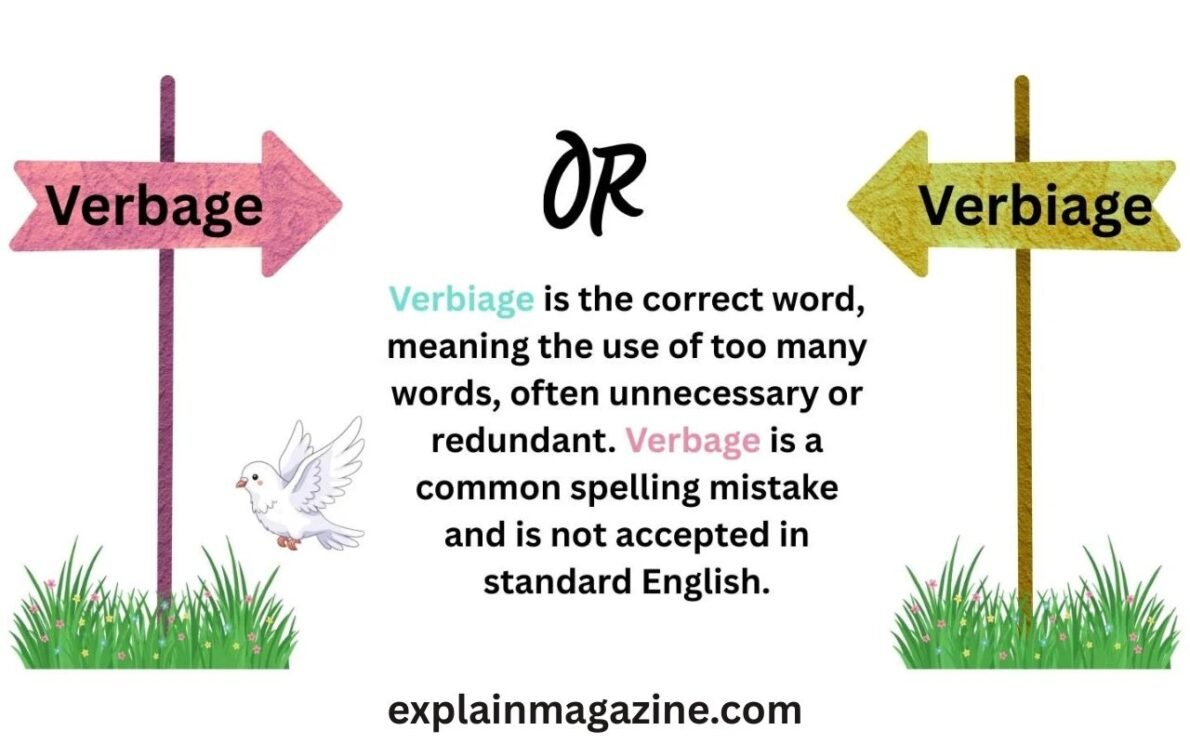
The simple answer is that verbiage is the correct spelling.
The word verbage is generally considered a misspelling or nonstandard variant. While many people use it accidentally, dictionaries and professional style guides recognize only verbiage as the standard form. In formal writing, academic work, business communication, and published content, verbiage is the spelling you should always use.
Correct Examples
- The contract contains too much verbiage.
- Please review the verbiage before publishing the article.
- The legal verbiage was difficult to understand.
Incorrect Examples
- The contract contains too much verbage.
- Please simplify the verbage in this document.
Using the correct spelling helps maintain professionalism and credibility in your writing.
Verbage or Verbiage Meaning
The word verbiage generally refers to the words or wording used in speech or writing. Depending on the context, it can have either a neutral or negative meaning.
In its neutral sense, verbiage simply means the wording or language used in a document, speech, advertisement, contract, or message.
For example:
- We need to update the verbiage on the website.
- The marketing team approved the new verbiage.
In its more common negative sense, verbiage refers to language that is unnecessarily wordy, complicated, or excessive.
For example:
- The report was full of unnecessary verbiage.
- The speech contained too much verbiage and not enough useful information.
This dual meaning makes verbiage a flexible word in modern English.
Define Verbage or Verbiage
If someone asks you to define verbage or verbiage, the correct definition should focus on the standard word, verbiage.
Verbiage Definition:
A noun meaning:
- The wording used in speech or writing.
- Excessive, complicated, or unnecessary language.
- A style of expression using words.
The exact meaning depends on how the word is used in a sentence.
Examples:
- The policy’s verbiage needs revision.
- The article contains excessive verbiage.
- The legal verbiage confused many readers.
Verbage or Verbiage Definition Explained
One reason for the confusion is that many people hear the word before they see it written. Because the pronunciation can make the middle “i” difficult to notice, some writers naturally assume the spelling should be “verbage.”
However, the accepted English noun is verbiage, which originated through French and ultimately traces back to words related to language and expression. The spelling has been established in English for centuries.
When discussing wording, phrasing, or excessive language, always choose verbiage.
Verbage or Verbiage Pronunciation
The standard pronunciation of verbiage is:
The stress falls on the first syllable.
Many speakers pronounce it similarly to:
“VER-bee-ij”
Because the middle sound is subtle, some people mistakenly assume the spelling is “verbage.” Despite this pronunciation confusion, the correct written form remains verbiage.
Which Is Correct: Verbage or Verbiage?
The correct answer is always verbiage.
Unlike some English words that have British and American spelling variations, there is no accepted version where “verbage” becomes standard.
Correct
- The editor removed unnecessary verbiage.
- The document contains technical verbiage.
Incorrect
- The editor removed unnecessary verbage.
- The document contains technical verbage.
Professional writers, editors, teachers, and dictionaries consistently recommend using verbiage.
Do You Say Verbage or Verbiage?
In speech, people sometimes say what sounds like “verbage” because the pronunciation makes the word easy to mishear.
However, when speaking standard English, the intended word is still verbiage.
In other words:
- People may hear “verbage.”
- The actual word is “verbiage.”
This explains why the misspelling appears so often online and in informal writing.
Verbage or Verbiage Spelling
A useful spelling rule is:
Verbiage contains the letter “i.”
Correct:
VERBIAGE
Incorrect:
VERBAGE
Many language experts suggest remembering the phrase:
“Verbiage has an I.”
This simple memory trick helps avoid one of the most common spelling mistakes involving the word.
Why Do People Write Verbage Instead of Verbiage?
Several factors contribute to this mistake.
Pronunciation
The middle vowel sound is not strongly emphasized, making the word sound like “verbage.”
Familiarity with the Word “Verb”
People often assume the word is formed from:
verb + age
which naturally leads to:
verbage
However, this is not the standard spelling.
Limited Exposure
Many people hear the word in conversation long before they encounter it in professional writing.
As a result, they write what they believe they hear.
Verbiage in Professional Writing
The word verbiage appears frequently in:
- Business communication
- Legal documents
- Academic writing
- Marketing materials
- Website content
- Editorial reviews
Examples:
- The legal verbiage made the contract difficult to understand.
- The editor reduced unnecessary verbiage from the article.
- We should simplify the website’s verbiage.
In professional settings, using the correct spelling is important because spelling errors can affect credibility.
Verbiage Examples in Sentences
Here are practical examples showing how the word is used.
Neutral Meaning
- The company updated the verbiage in its privacy policy.
- The new verbiage sounds more professional.
- We approved the final verbiage for the advertisement.
Negative Meaning
- The report contains too much verbiage.
- The article suffers from excessive verbiage.
- The contract’s legal verbiage confused customers.
- The speaker relied on verbiage rather than clear explanations.
- Remove unnecessary verbiage to improve readability.
Common Mistakes to Avoid
Many writers make the following mistakes:
Mistake 1
Writing “verbage” instead of “verbiage.”
Mistake 2
Assuming both spellings are acceptable.
Mistake 3
Believing verbage is a British English variation.
In reality, British English and American English both use verbiage as the standard spelling.
Verbiage in Modern English
Today, verbiage is commonly used when discussing communication, writing quality, editing, and language clarity.
Editors often use the term when recommending shorter, clearer writing.
For example:
- Cut unnecessary verbiage.
- Simplify the verbiage.
- Reduce technical verbiage.
The goal is usually to make content easier to understand and more effective for readers.
Conclusion
Read More: Specially or Especially: Which Is Correct?
The debate between verbage or verbiage is actually quite simple. The correct spelling is verbiage, while verbage is generally considered a misspelling in standard English. Verbiage can refer to wording, phrasing, or language in general, but it is often used to describe language that is overly complicated, wordy, or unnecessary.
Remember this easy rule:
Verbiage = Correct
Verbage = Incorrect
Whether you are writing emails, reports, articles, legal documents, or website content, using the correct spelling will help your writing appear more professional and polished. At worldknowledge, our goal is to make confusing English words and grammar topics easier to understand so readers can communicate with greater confidence and accuracy.