
Many English learners and even native speakers often get confused between specially and especially. Since both words look similar and sometimes appear in similar contexts, it can be difficult to know which one is correct. Questions such as “Is it specially or especially?”, “Should I write specially for you or especially for you?”, and “What is the difference between specially and especially?” are among the most common grammar questions in English.
The good news is that both words are correct. However, they have different meanings and are used in different situations. Understanding when to use each word can help you write and speak more naturally and accurately.
Quick Bio Table
| Topic | Details |
|---|---|
| Words Covered | Specially and Especially |
| Word Type | Adverbs |
| Especially Meaning | Particularly, above all, more than others |
| Specially Meaning | Specifically, for a particular purpose |
| Common Confusion | Specially for you vs Especially for you |
| English Variety | Used in both British and American English |
| Difficulty Level | Beginner to Intermediate Grammar |
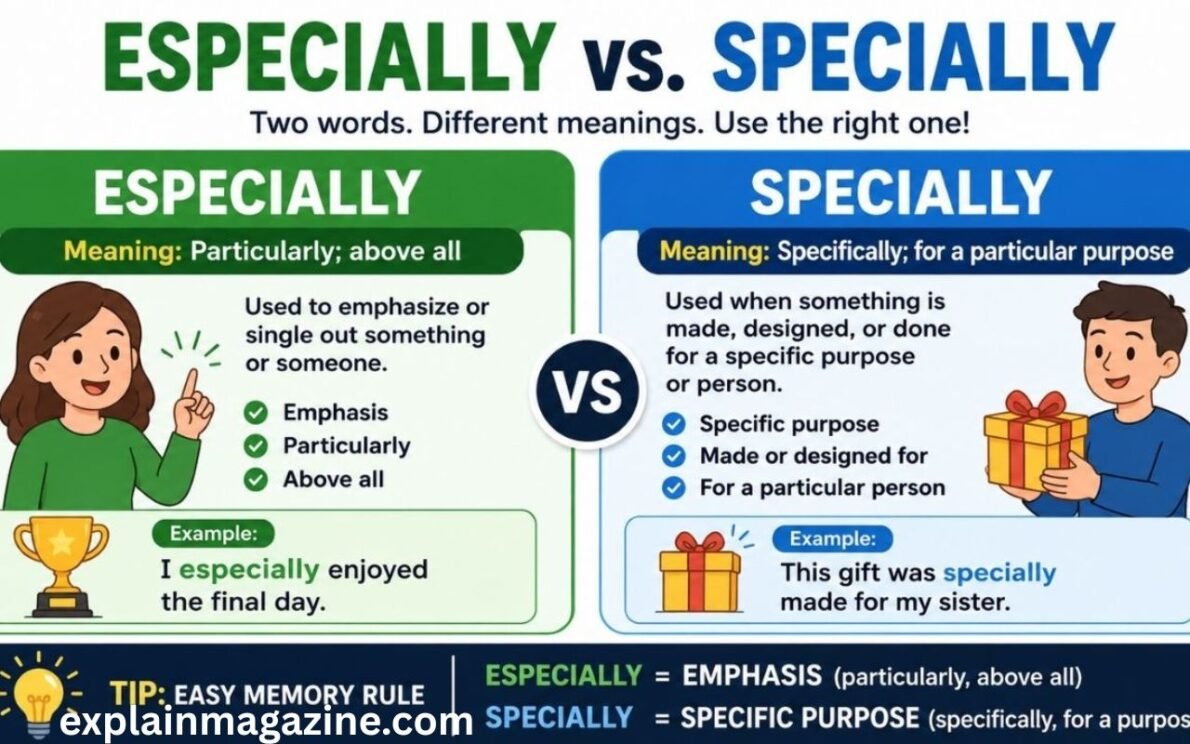
| Main Rule | Especially = Particularly, Specially = Specifically |
What Does “Especially” Mean?
The word especially is used when something is more important, noticeable, or significant than other things. It usually means particularly, above all, or more than others.
When you use especially, you are highlighting one thing from a group.
Examples of Especially
- I especially enjoy reading mystery novels.
- She loves animals, especially cats.
- This lesson is especially useful for beginners.
- The park is beautiful, especially during spring.
- He was especially proud of his achievement.
In each example, the word emphasizes one item or idea more than others.
A simple trick is to replace especially with particularly. If the sentence still makes sense, then especially is usually the correct choice.
For example:
- I especially like chocolate.
- I particularly like chocolate.
Both sentences have the same meaning.
What Does “Specially” Mean?
The word specially means for a specific purpose, specifically, or in a special way. It is often used when something is designed, made, prepared, or arranged for a particular reason.
Examples of Specially
- The cake was specially made for the wedding.
- This software was specially designed for teachers.
- We came specially to meet you.
- The room was specially decorated for the event.
- The equipment was specially developed for medical use.
In these examples, the word focuses on purpose or intention.
A useful memory trick is to replace specially with specifically. If the sentence still sounds correct, specially is probably the right choice.
For example:
- The chair was specially designed for children.
- The chair was specifically designed for children.
Both sentences express the same idea.
Specially or Especially: What Is the Difference?
The biggest difference between the two words is their meaning.
Especially
Use especially when you mean:
- Particularly
- Above all
- More than others
- To a greater degree
Specially
Use specially when you mean:
- Specifically
- For a particular purpose
- Intentionally
- Custom-made
Comparison Examples
Correct:
- I especially enjoy Italian food.
Incorrect:
- I specially enjoy Italian food.
Reason: The sentence expresses preference, not purpose.
Correct:
- This machine was specially designed for factories.
Less Natural:
- This machine was especially designed for factories.
Reason: The machine has a specific purpose.
Understanding this distinction will help you choose the correct word in most situations.
Is It “Specially for You” or “Especially for You”?
This is one of the most frequently searched grammar questions.
Interestingly, both phrases can be correct depending on the intended meaning.
Especially for You
This phrase usually means:
- Particularly for you
- Above all others
- With special attention to you
Examples:
- I bought this gift especially for you.
- This message is especially for you.
The focus is on emphasizing the person.
Specially for You
This phrase usually means:
- Specifically made for you
- Custom-created for you
- Prepared with a particular purpose
Examples:
- This cake was specially made for you.
- These clothes were specially designed for you.
The focus is on creation or preparation.
Made Specially or Especially for You
When talking about products, gifts, meals, or custom items, made specially for you is often the better choice because it emphasizes that something was created specifically for a person.
Examples:
- This ring was specially made for you.
- The meal was specially prepared for the guests.
- The furniture was specially built for the house.
However, in everyday conversation many speakers also use especially for you, and the difference is often very small.
Which Is Correct: Specially or Especially?
The answer is simple: both are correct.
The real question is which word better expresses your meaning.
Choose especially when talking about importance, preference, or emphasis.
Choose specially when talking about purpose, design, preparation, or customization.
Quick Rule
Especially = Particularly
Specially = Specifically
This rule works in most English writing situations.
Specially or Especially in UK English
In British English, the distinction between specially and especially still exists, but native speakers sometimes use them interchangeably in casual speech.
For example:
- I bought this especially for you.
- I bought this specially for you.
Both may sound natural to British speakers depending on the context.
However, formal writing generally follows the traditional distinction:
- Especially = particularly
- Specially = specifically
Therefore, understanding the difference remains important for academic, professional, and business writing.
When to Use Specially or Especially
Use Especially When:
- Showing preference
- Highlighting importance
- Comparing one thing with others
- Emphasizing a person, thing, or idea
Examples:
- I especially enjoyed the movie.
- This guide is especially useful.
- She was especially happy today.
- The weather is especially pleasant in autumn.
Use Specially When:
- Something is designed
- Something is made
- Something is customized
- Something is prepared
Examples:
- A specially designed wheelchair.
- A specially prepared meal.
- Specially trained staff.
- A specially developed program.
Specially or Especially Examples in Sentences
Especially Sentences
- I especially like visiting museums.
- She was especially interested in science.
- This course is especially useful for beginners.
- They enjoyed the holiday, especially the beach activities.
- He was especially proud of his team’s success.
Specially Sentences
- The car was specially modified for racing.
- The building was specially constructed for research.
- The package was specially prepared for delivery.
- The menu was specially created for vegetarians.
- The event was specially organized for students.
Specially or Especially Grammar Rules
Grammar experts generally recommend following these guidelines:
Rule 1: Use Especially for Emphasis
Examples:
- I especially admire her dedication.
- This issue is especially important.
Rule 2: Use Specially for Purpose
Examples:
- The software was specially developed.
- The uniform was specially designed.
Rule 3: Remember the Replacement Test
If you can replace the word with particularly, use especially.
If you can replace the word with specifically, use specially.
This simple test can solve most grammar problems involving these words.
Specially or Especially in English Learning
For English learners, these words often seem difficult because they look nearly identical. Fortunately, the difference becomes much easier once you focus on meaning instead of spelling.
Think of it this way:
- Especially highlights importance.
- Specially highlights purpose.
Whenever you are unsure, ask yourself:
“Am I emphasizing something?”
If yes, use especially.
“Am I describing a specific purpose or design?”
If yes, use specially.
With regular practice, choosing the correct word becomes automatic.
Conclusion
Read More: Invision or Envision: Meaning, Differences, Correct Usage, and Common Grammar Mistakes
The confusion between specially and especially is very common, but the distinction is actually straightforward. Both words are correct English adverbs, yet they serve different functions.
Especially is used to emphasize something as particularly important, noticeable, or preferred. Specially is used when something is created, designed, arranged, or prepared for a specific purpose.
A simple rule to remember is:
Especially = Particularly
Specially = Specifically
By applying this rule and practicing with real examples, you can confidently use both words in speaking and writing. Whether you are studying English, writing professionally, or simply improving your grammar, understanding the difference between specially and especially will make your communication clearer and more natural.
At worldknowledge, we aim to simplify confusing English grammar topics and provide practical explanations that help learners improve their language skills with confidence.